
Jane Migdol March 3, 2026
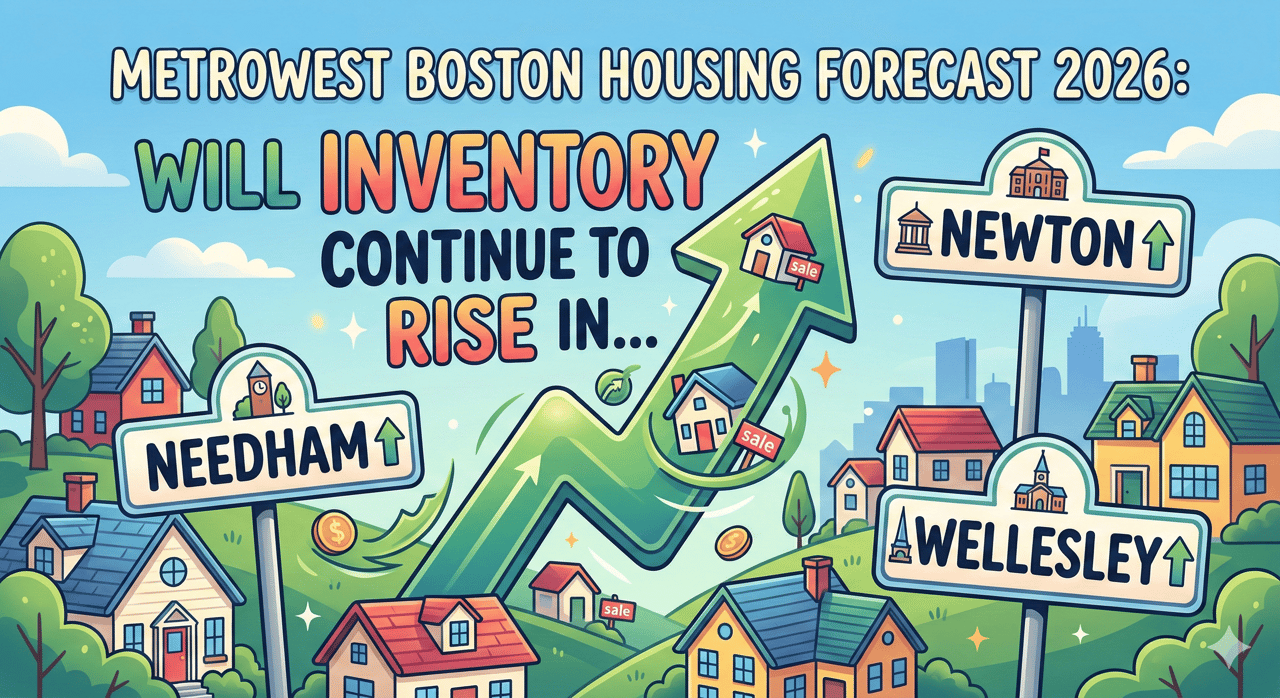
• Inventory in MetroWest Boston has improved compared to the severe shortages of the past several years, but it remains below long term norms.
• Higher mortgage rates have slowed demand, which is allowing listings to stay on the market longer in towns like Needham, Newton, and Wellesley.
• Sellers no longer hold automatic leverage in every price point, especially above the median price range.
• Buyers have more negotiating power in 2026, but well priced homes in prime locations still move quickly.
• A sustained inventory surge is unlikely without meaningful changes in interest rates or new construction volume.
The MetroWest Boston housing market is entering 2026 with more balance than it has seen in years. After an extended period of record low supply and aggressive bidding wars, inventory levels have started to edge upward. Buyers are asking whether this is the beginning of a meaningful shift. Sellers are questioning whether they have missed the peak.
The central question for 2026 is clear. Will inventory in MetroWest Boston continue to rise, or will it plateau once the spring market stabilizes? Understanding this requires examining local supply constraints, interest rate pressure, and homeowner behavior across towns such as Needham, Newton, and Wellesley.
This analysis provides a data driven and experience based forecast to help both buyers and sellers make informed decisions in the current environment.
MetroWest Boston remains structurally undersupplied. While listing counts have improved compared to the historic lows of 2021 through 2023, overall housing supply remains constrained by limited buildable land, restrictive zoning, and a high percentage of long term homeowners with low mortgage rates.
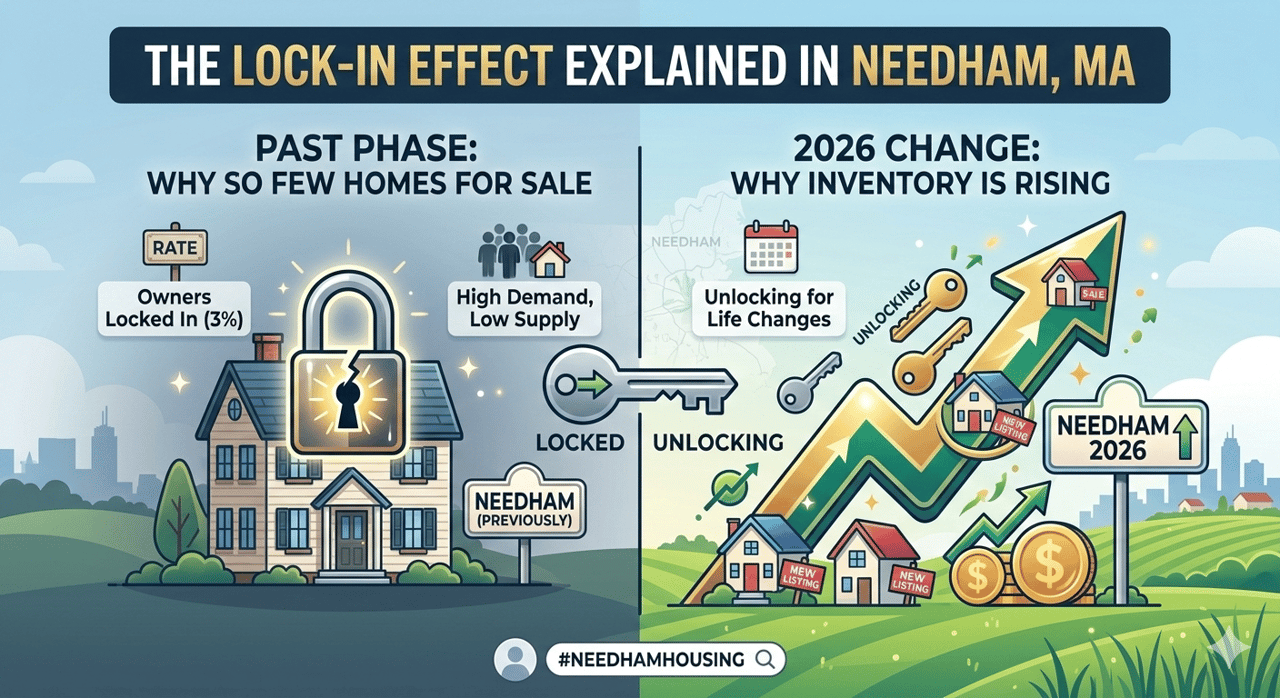
According to data published by Freddie Mac and the Federal Reserve, mortgage rates remain elevated compared to the ultra low rate era. This has created a lock in effect. Homeowners with rates in the two to three percent range are reluctant to sell and finance a new purchase at today’s rates.
At the same time, platforms such as Zillow and Realtor.com show that new listings have modestly increased across suburban Boston markets. Local MLS data through MLS PIN confirms that days on market have expanded slightly in several MetroWest towns.
However, inventory growth has been incremental, not dramatic. This is an important distinction for 2026.
In towns like Needham and Wellesley, luxury and upper tier homes are experiencing longer marketing times. When rates remain elevated, affordability tightens. Buyers become more selective, particularly above the median price.
This does not mean demand has disappeared. It means absorption has slowed. As a result, active listings accumulate slightly more than in prior years.
After several years of immediate multiple offers, some homeowners believe the market remains overheated. They are listing at aspirational prices. In Newton, this is especially visible in renovated homes priced aggressively above recent comparable sales.
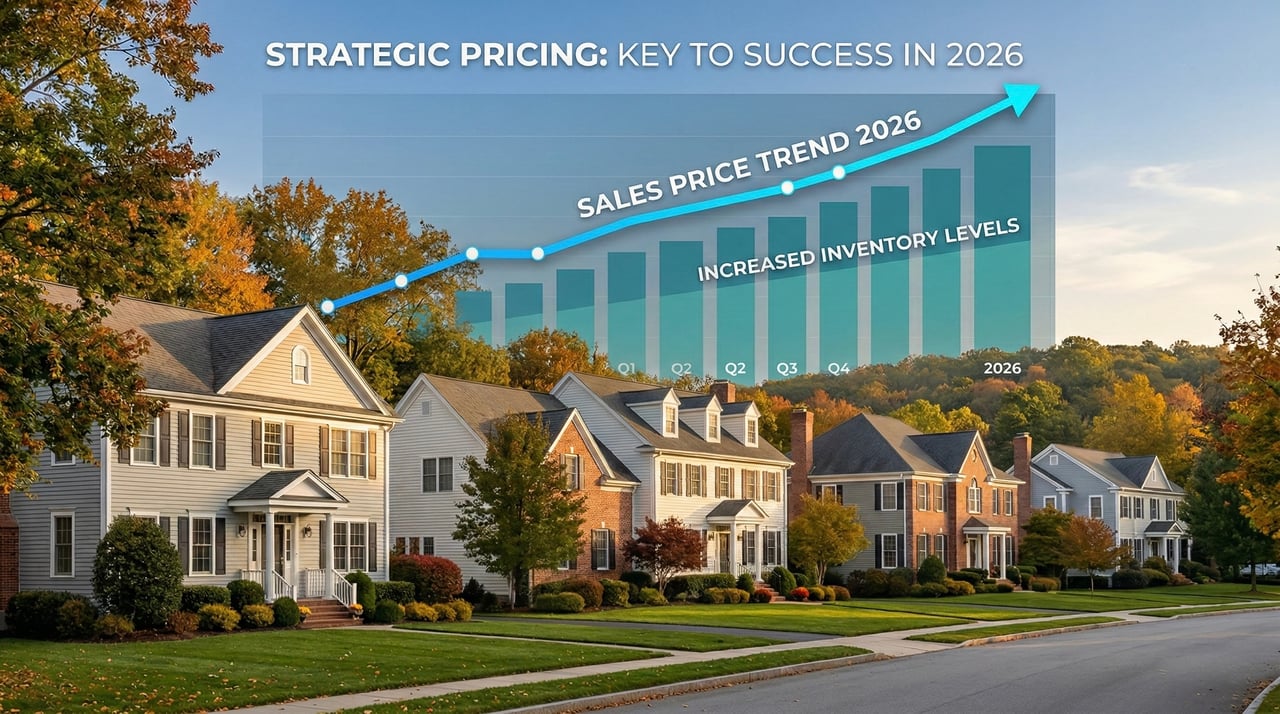
When pricing overshoots the market, homes sit. That contributes to visible inventory growth even if buyer demand remains healthy at realistic price levels.
Some homeowners are deciding that lifestyle changes outweigh rate concerns. Growing families, downsizers, and relocation sellers are reentering the market. This gradual normalization is contributing to higher listing counts compared to the extreme scarcity of prior years.
Despite recent increases, a sustained inventory spike is unlikely in MetroWest Boston for three structural reasons.
Land constraints and permitting hurdles restrict large scale development in established suburbs like Needham and Wellesley. New construction exists, but it replaces older homes rather than adding significant net supply.
Communities with top ranked public schools continue to attract buyers who prioritize education stability. Even with higher rates, this demand floor supports absorption.
MetroWest homeowners tend to stay longer than the national average. Many have significant equity and low fixed rate mortgages. Without financial pressure, there is little incentive to sell quickly.
Below is a simplified comparison of how inventory dynamics differ across key MetroWest communities.
• Mid range homes priced appropriately are moving within typical seasonal timelines.
• Luxury homes above the median are seeing longer exposure.
• Tear down and new construction opportunities remain competitive.
• Inventory is building more noticeably in certain price bands.
• Buyers are negotiating inspection and financing terms more often than in previous years.
• Well located homes near village centers continue to command strong attention.
• Entry level inventory remains tight relative to demand.
• High end properties are more sensitive to rate fluctuations.
• Buyers are carefully evaluating value relative to recent comparable sales.
This nuanced pattern shows growth in inventory, but not oversupply.
For buyers and sellers reviewing detailed town specific trends, this topic aligns closely with broader MetroWest housing analysis available on janemigdol.com, particularly local market reports and seller strategy guides.
Externally, interest rate direction from the Federal Reserve, mortgage data from Freddie Mac, and listing trend analysis from Zillow and Realtor.com remain critical reference points for understanding national influences on local inventory.
However, MetroWest remains a micro market. National headlines do not always reflect street level conditions in Newton Center or Wellesley Hills.
Not broadly. Buyers have gained more negotiating power in certain price ranges, but overall supply still does not exceed demand in most towns.
Prices have stabilized in many segments rather than declining sharply. Overpriced listings are adjusting, but well priced homes are holding value.
Lower rates would likely increase both buyer demand and seller activity. The net effect on inventory would depend on which side moves faster.
Timing depends on property condition, price range, and motivation. In many cases, listing during balanced conditions allows for realistic pricing and serious buyers.
They are less common than in prior years, but they still occur for homes that are updated, well located, and priced correctly.
Generally, four to six months of supply is considered balanced. Most MetroWest towns remain below that threshold.
Inventory will likely continue to rise modestly through the traditional spring and early summer cycles, then stabilize. I do not expect a flood of listings unless there is a major shift in economic conditions.
The more probable outcome is gradual normalization. Days on market may extend slightly. Price growth may moderate. But strong school districts, commuter access, and limited land supply will continue to support underlying demand.
For buyers, this is a more strategic window than the extreme seller dominated years. For sellers, precision pricing and preparation matter more than ever.
Inventory in MetroWest Boston is rising in 2026, but it is doing so in a controlled and incremental way. This shift creates more balance without signaling distress.
Buyers should use this period to negotiate thoughtfully and evaluate value carefully. Sellers should focus on realistic pricing and property presentation to capture serious demand.
The market is adjusting, not collapsing. Those who understand the local dynamics in Needham, Newton, and Wellesley will make stronger decisions.
I have spent decades advising buyers and sellers across MetroWest Boston, with deep experience in Needham, Newton, and Wellesley. My work focuses on interpreting real time market shifts and helping clients act with clarity rather than emotion. In a market that continues to evolve, informed strategy remains the most powerful advantage.

April 2, 2026
March 24, 2026

March 15, 2026

March 12, 2026

March 5, 2026
March 4, 2026
March 3, 2026
February 27, 2026

February 26, 2026
With a curated approach to real estate, Jane Migdol combines market expertise with a deep appreciation for design, architecture, and lifestyle. Her clients benefit from refined strategy, global reach, and a personal touch that transforms the buying and selling experience into something truly remarkable. When you work with Jane, you’re not just making a move — you’re elevating your way of living.